What is hydrochloric acid? The dangers and handling of industrial hydrochloric acid [Basic Knowledge]
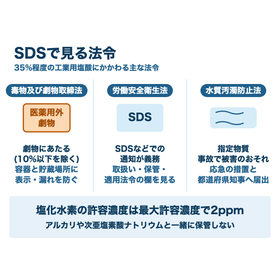
What is the difference between hydrochloric acid and hydrogen chloride? This will explain the uses and dangers of industrial hydrochloric acid, regulations to check with SDS, and how to respond to storage and leaks.
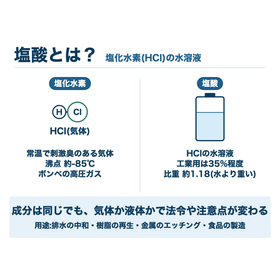
Hydrochloric acid is an aqueous solution of hydrogen chloride (HCl) dissolved in water. It has strong acidity and is used in a wide range of fields, including neutralizing wastewater (pH adjustment), regenerating ion exchange resins used in pure water systems, metal etching, and food production. ■ Industrial grade is about 35% liquid For industrial use, hydrochloric acid containing about 35% hydrogen chloride is used. Its specific gravity is approximately 1.18, making it a liquid heavier than water. ■ What is the difference between hydrochloric acid and hydrogen chloride? Hydrogen chloride is a gas at room temperature with a pungent odor and is also referred to as anhydrous hydrochloric acid. Its boiling point is about -85°C, and it is handled as a high-pressure gas packed in cylinders. In contrast, hydrochloric acid is its aqueous solution. Although the components are the same, the regulations and handling precautions differ depending on whether it is a gas or a liquid. ■ Does hydrochloric acid burn? Hydrochloric acid itself does not burn or explode. However, it can corrode many metals and generate hydrogen gas, which can ignite and explode when mixed with air. To prevent rusting, it is essential to choose suitable materials and implement anti-corrosion measures for equipment handling hydrochloric acid. Please feel free to consult us first.
- Company:トリイ
- Price:Other